
For advisers
Know who to call, and what to say
Your day sorted before it starts, every client and policy across every insurer, and the tools for the meeting itself: needs analysis, Taglish scripts and calculators, on the phone you already carry.
Your day
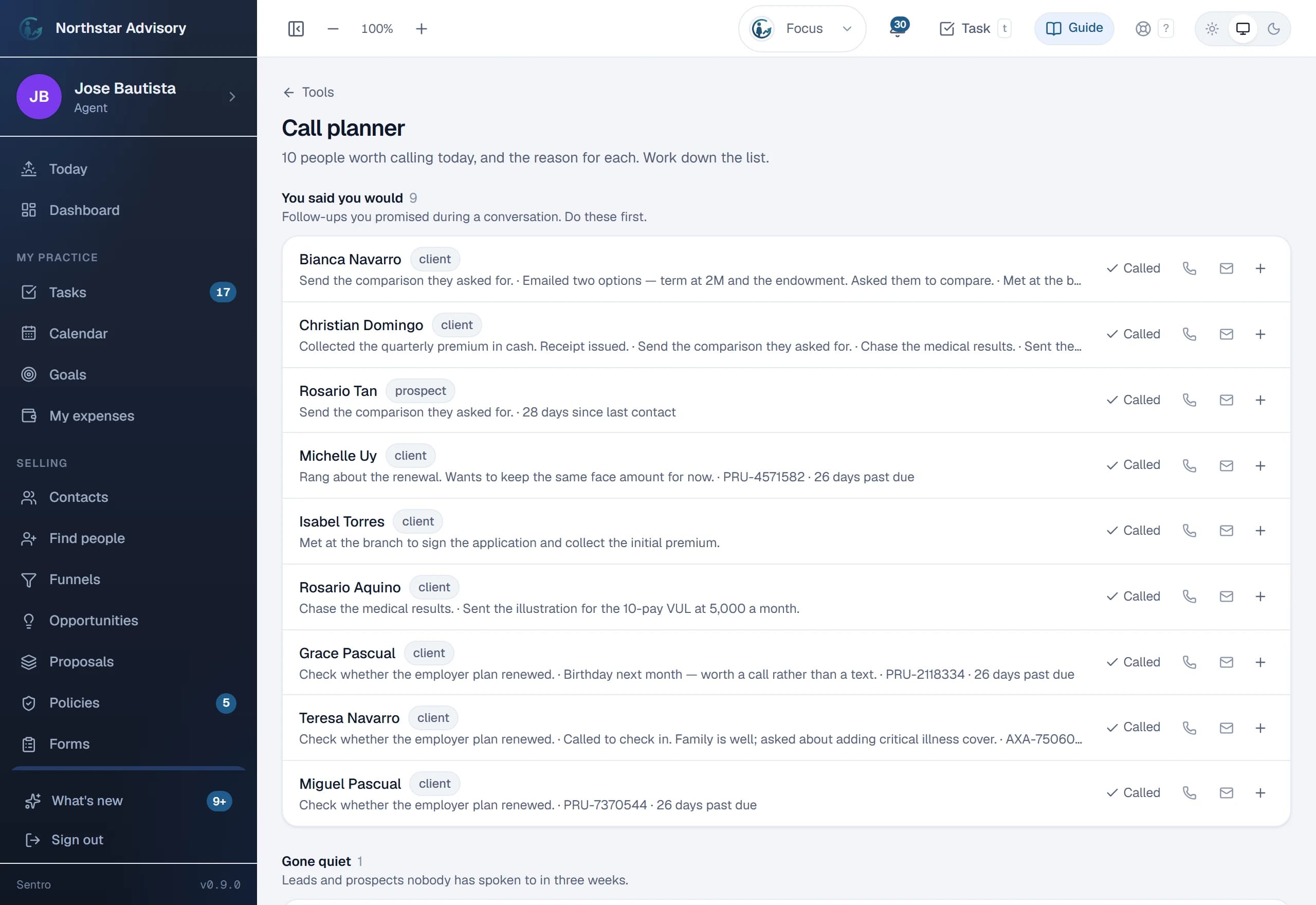
One list, waiting for you every morning
Today's appointments, the follow-ups you promised, birthdays, premiums to chase and anything already late, pulled from five places so you do not have to check five places. The same list is in your inbox at seven, and your calendar syncs both ways with Google.
Everything you promised, everyone falling due and every birthday, gathered from five places into one list before you have opened anything. The same list arrives by email at seven.
Your clients
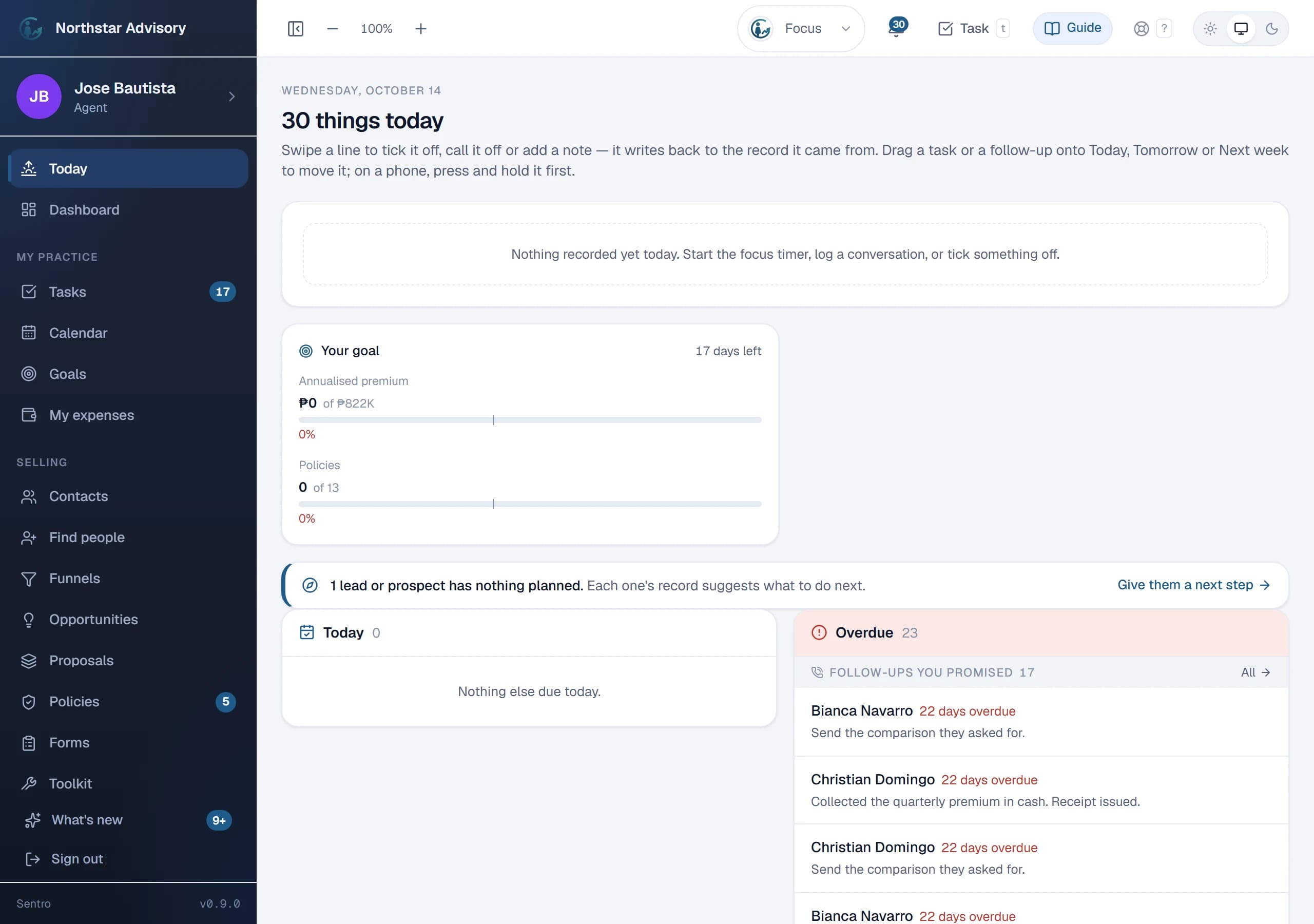
Every client, every insurer, one place
Policies from every insurer you write for, with total cover, premium schedules, what falls due next and fund values, beside every conversation you have logged. One list instead of eight insurer portals.
Sun Life, Pru Life, Manulife, AXA, one table, with premiums, status, fund values and what falls due next. Policies that live in eight portals, in one place.
What to do next
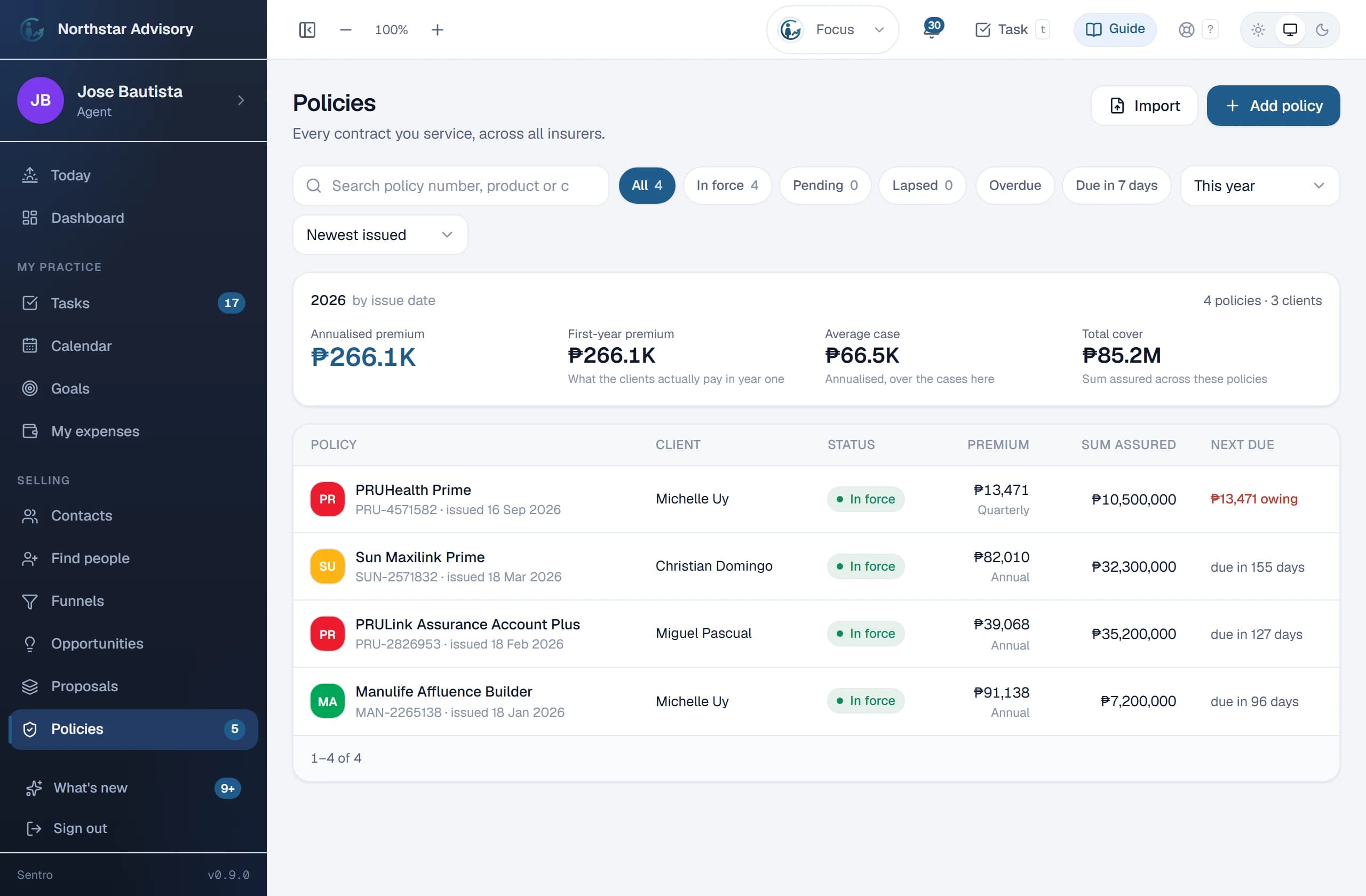
Every client has a next step
Open anyone, from the lead you met at last night's seminar to a client of ten years, and the first thing you see is what to do next, with the button to do it: call, remind me tomorrow, book the meeting, run the building blocks, start the proposal. Opportunities reads your whole book for the rest.
Open anyone and the first thing you see is the next step, with the button to do it: call, remind me tomorrow, book the meeting. Under it, their policies across every insurer, every conversation and the family behind them.
New leads
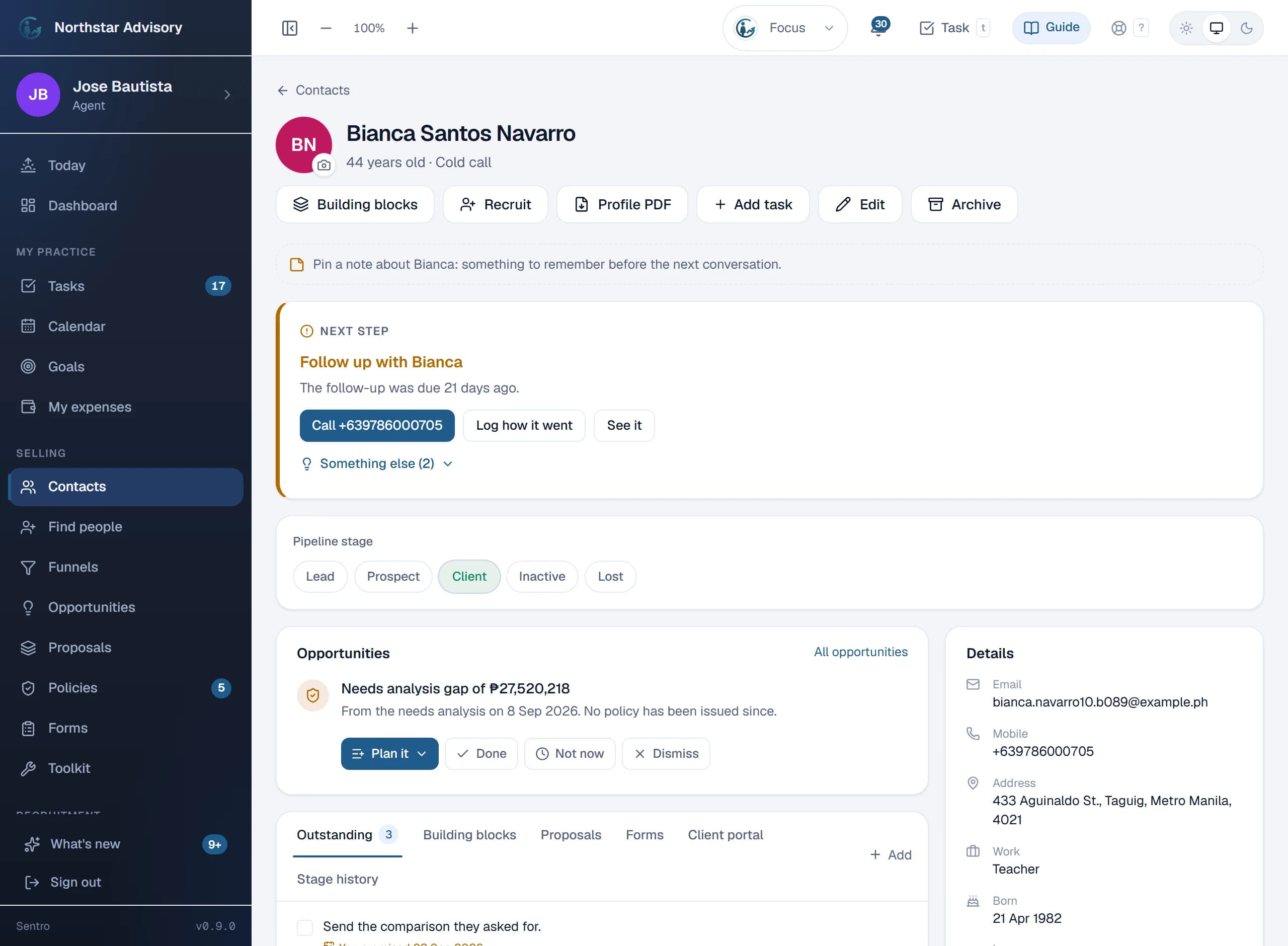
Leads that follow up by themselves
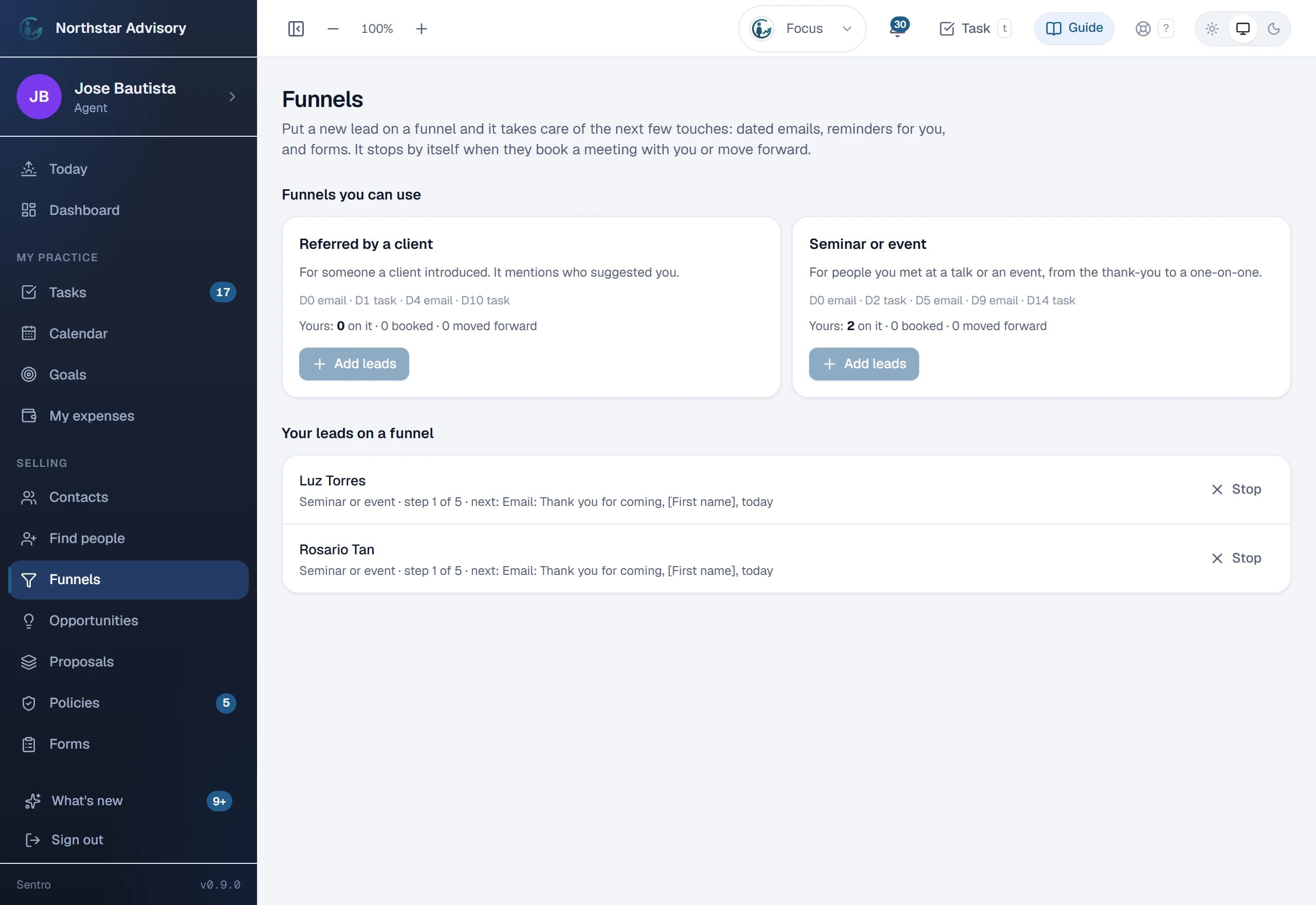
Put a seminar lead, a referral or a name from your Project 100 on a funnel and the next few touches are taken care of: a reminder to call, a short email, a form to fill in. It stops by itself the moment they book a meeting with you.
- A referral link your clients can pass to friends; whoever fills it in arrives as your lead
- Ready-made funnels for seminars, referrals, Project 100, imported contacts and clients gone quiet
- Emails only to people who agreed to receive them, as the Data Privacy Act asks
- Nobody forgotten: Contacts and Today list every lead with nothing planned
In the meeting
The rules you explain, using their own numbers
Seven of the ones you use most, as calculators you can type into, not slides. Enter their salary and the split appears; enter a rate and it shows how long the money takes to double.
Each one carries the place it breaks. The 4% rule comes from American market history, not ours; the Rule of 72 ignores tax, charges and inflation. Knowing where a rule stops being true is what lets you use it in front of a client without promising too much.
- 50/30/20Needs, wants and the rest
- Pay yourself firstSave on payday, not on what is left
- Zero-based budgetEvery peso given a job
- Rule of 72How long money takes to double
- Asset mixA starting point from age
- Emergency fundMonths of essential spending
- The 4% ruleWhat a pot can safely pay out
And the ones you walk through together
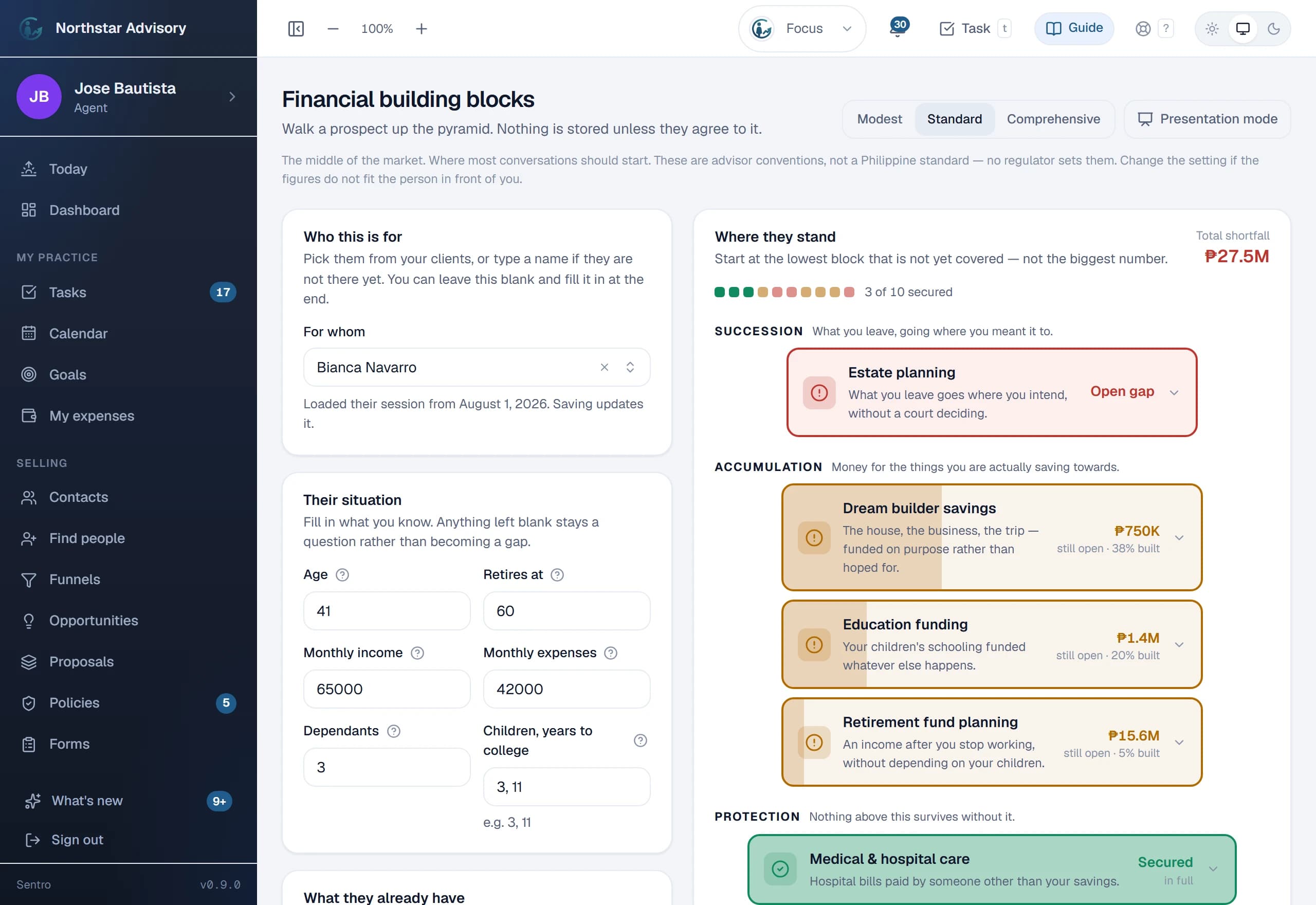
The financial building blocks worked up the pyramid from their own figures, a circle of life with their own ages, and approach scripts written in Taglish the way the conversation actually goes. The summary prints for them to take home.
The gap between what a family has and what they would need, worked out in front of them and printable as a summary they take home. No spreadsheet, no guessing at the numbers afterwards.
Paperwork
Forms they fill in on their phone
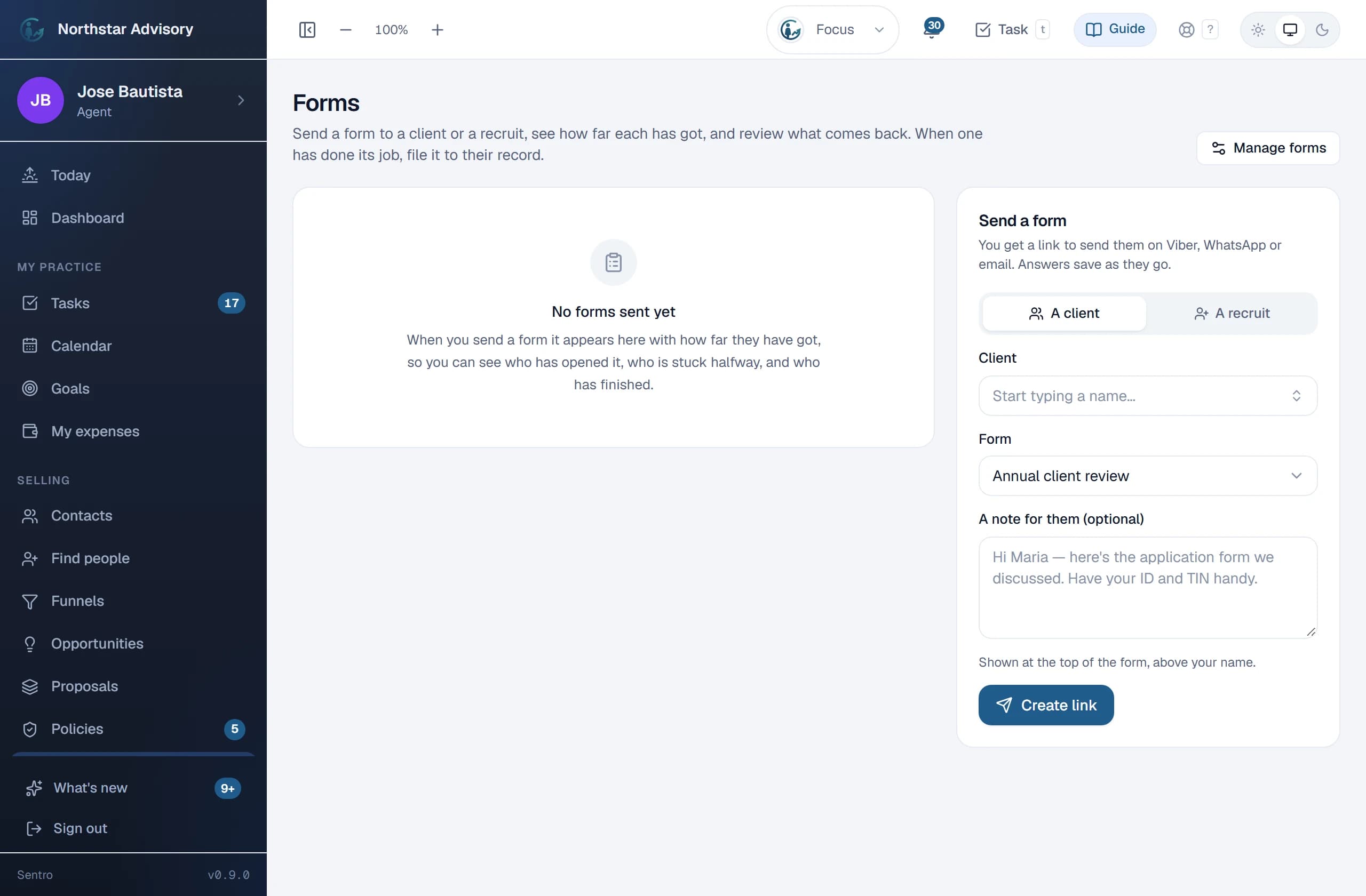
Send an application, a fact-find or an annual review as a link on Viber, WhatsApp or email. Their answers save as they go, and nothing reaches you until they submit.
- See who has opened it and how far each person has got
- Read the answers laid out like the paper form, with the Yes answers to check pulled to the top
- Print it, save it as a PDF, or copy the answers to key into the insurer's system
- File it to the client's record, against the policy it was for
Your year
A year that adds up
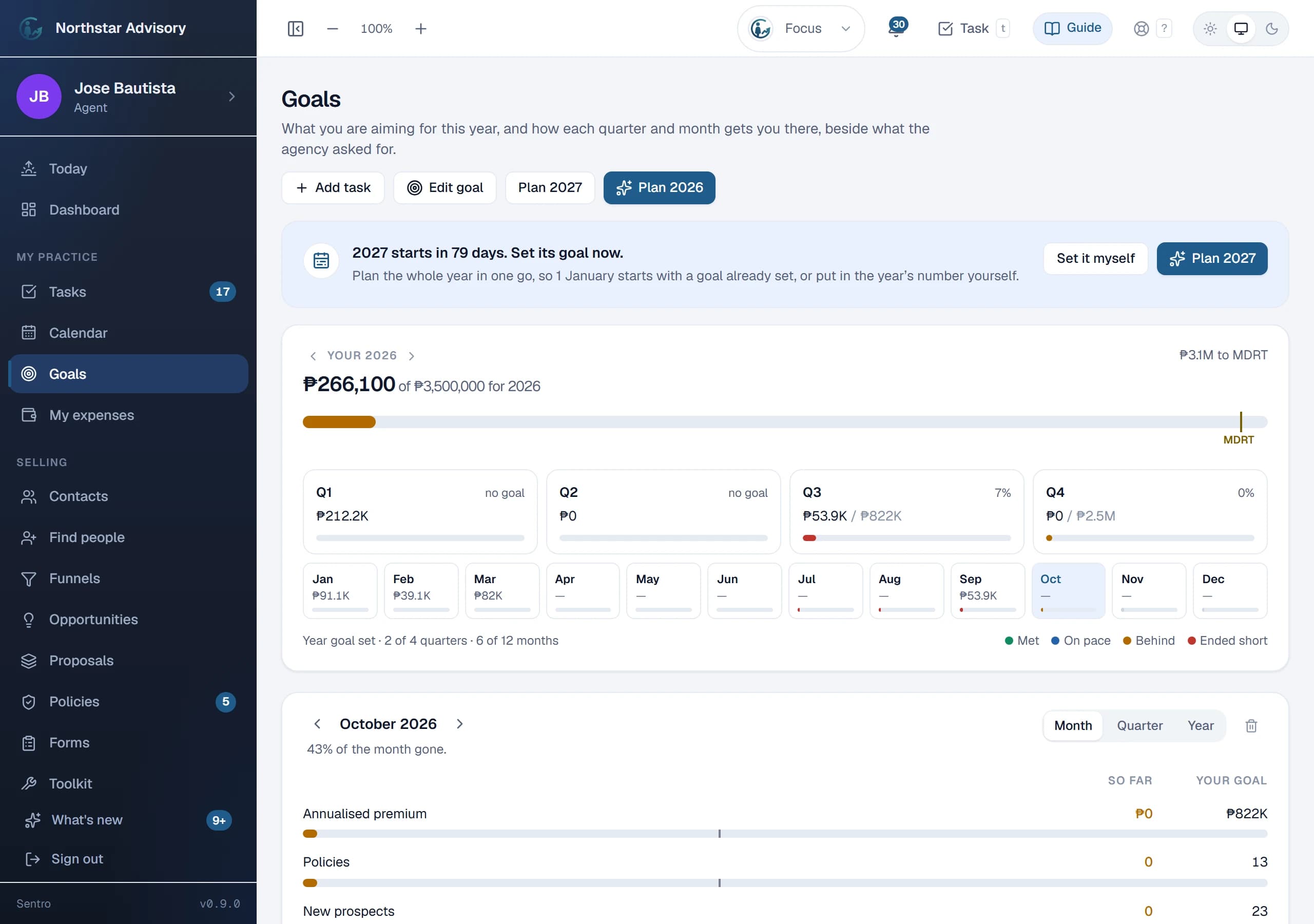
One aim for the year, MDRT or Court of the Table or your own figure, spread into quarters and months that add up to it, each coloured by pace. What you committed to sits beside what the agency asked for, and your dashboard says what is left to MDRT and what that works out to a month.
What stays yours
Your manager sees the numbers, not your notebook
A manager can see your clients and what they add up to, because that is what running a unit needs. The rest is yours.
Your call notes
Your pinned notes
Your leads
Your files
For your clients
They get their own view
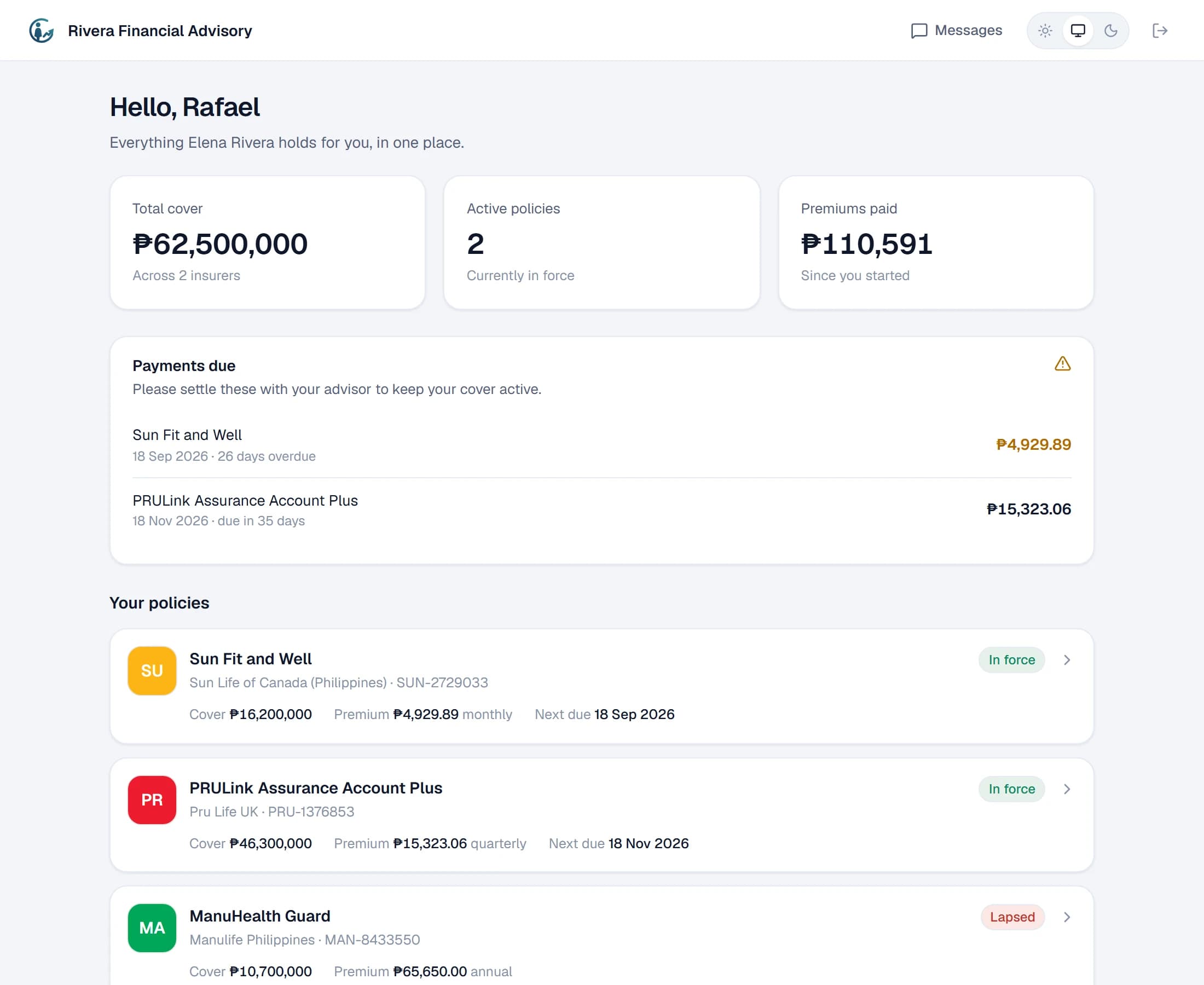
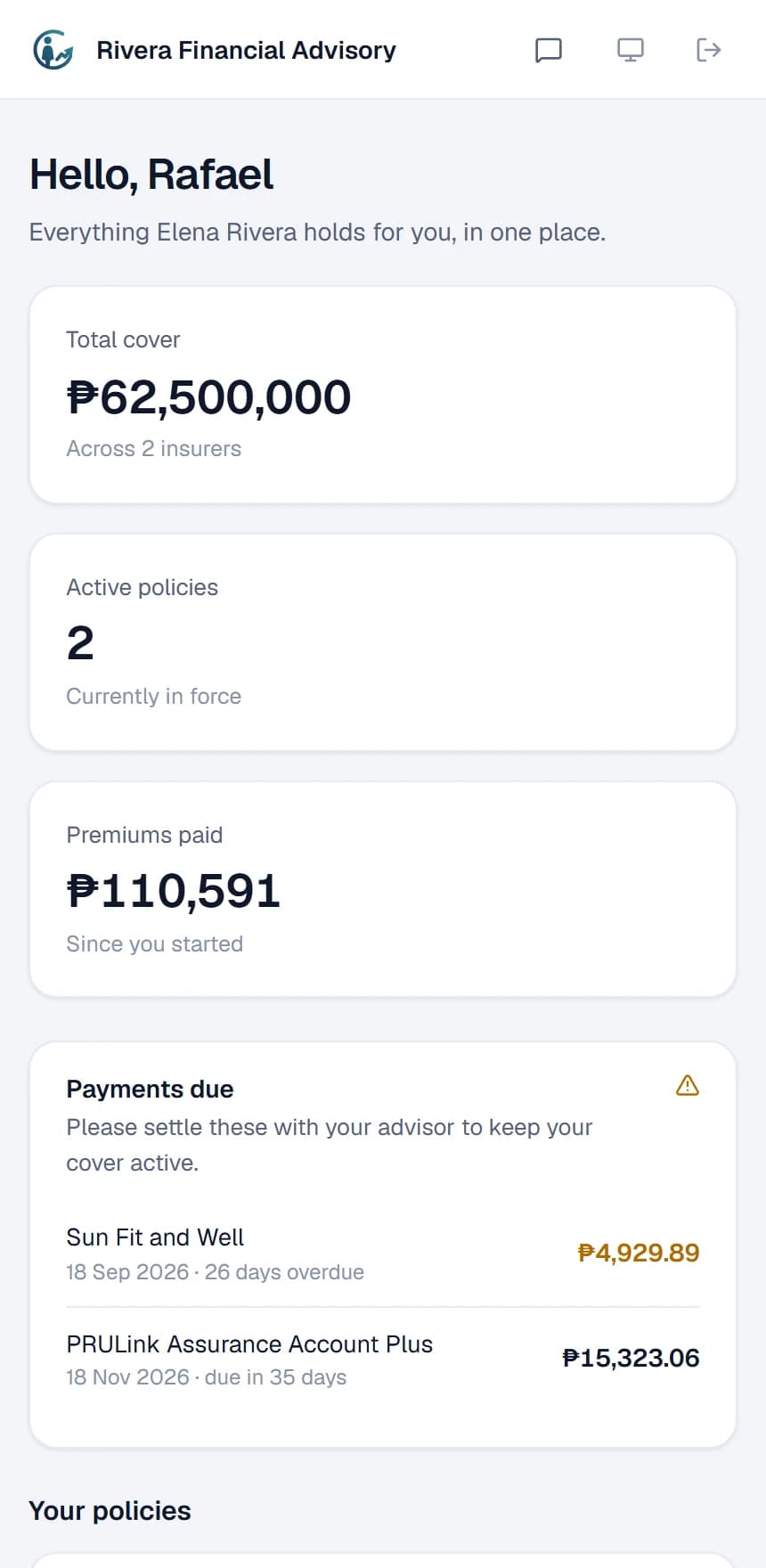
Your client can open their own page and see what they own, their total cover, what is due next and what their fund is worth, so they do not have to message you to ask. They get in through a link sent to their email, with no password to forget, and it carries your agency’s name and colours, not ours.
Bring Sentro to your agency
Show this page to your manager, or book the demo yourself. If you work independently, the Solo plan is the same product for one adviser.